


Russia just announced a messaging app decision that'll make WhatsApp look like a privacy haven.
Picture this: You're texting your friend about weekend plans, and suddenly your message goes through government servers. Sounds unusual? Well, that's basically what President Vladimir Putin signed into law on June 24, 2025 - a state-backed messaging app integrated with government services.
This isn't just another app hitting the market. It's Russia's answer to what they call "digital sovereignty" - which, honestly, is just a fancy way of saying "we want to know what's happening online."
The Backstory Nobody's Telling You
Here's where it gets really interesting. Russia has been trying to kick out Western tech companies since the 2022 Ukraine invasion. But here's the kicker - they couldn't just ban WhatsApp and Telegram overnight. Why? Because 70% of Russians use WhatsApp, while 51% use Telegram.
That's like, almost everyone with a smartphone.
So what's a government to do when they can't control what people are saying? Create their own app, obviously. And not just any app - one that's basically a Swiss Army knife of surveillance.
What This App Really Does (Spoiler: Everything)
This isn't your regular messaging app where you just send memes and voice notes. According to reports, users will be able to electronically sign official documents, access state documents including passports and student ID cards, and even use it as a communication platform for schools and colleges.
Think about that for a second. Your passport. Your student ID. Your official documents. All in one app. Controlled by the government.
A smartphone screen showing a messaging app interface with government documents, passport icons, and chat bubbles all mixed together.
But wait, there's more. The app, likely called "Max" and developed by Russian tech giant VK, combines a messenger, payment system, mini-applications, and a chatbot constructor for businesses. VK has been developing this WeChat-inspired platform since March 2025. It's basically WeChat's Russian cousin - except this cousin works for the government.
The Sneaky Part: How They'll Make You Use It
Now, you might think, "Nobody's gonna use this thing." Think again.
Mikhail Klimarev, director of the Internet Protection Society, expects Russia to slow the speeds of WhatsApp and Telegram to encourage people to switch over. Imagine trying to send a photo on WhatsApp and it takes 10 minutes. Meanwhile, the government app? Super fast.
But that's not even the most interesting part. The app will be pre-installed on new smartphones sold in Russia and made mandatory for operations at all public institutions.
Let that sink in. Every new phone. Every government office. Every school.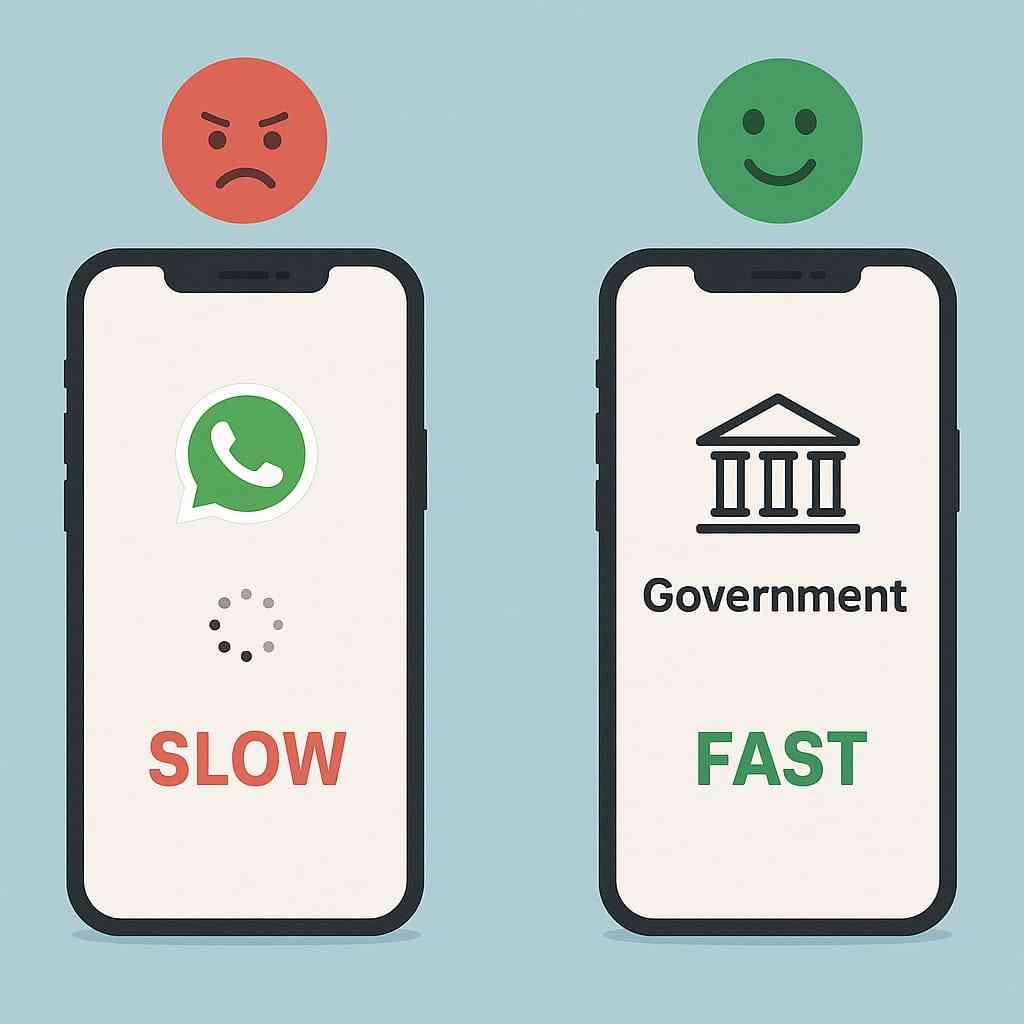
WhatsApp slowing down with a spinning loading icon, while the government app working perfectly fast
Why Your Privacy Just Changed
Remember when people worried about WhatsApp sharing some data with Facebook? That's small potatoes compared to this.
Critics say the fact that Russia will exercise state control over it poses risks to privacy and personal freedoms. One Russian social media user put it interestingly: "Russians will now be actively herded into a new, patriotic messenger so that Comrade Major can work more easily and efficiently".
Translation: Every message, every call, every document - all accessible to the government. No end-to-end encryption like WhatsApp. Just pure, unfiltered access.
The Money Behind the Move
Here's something wild - experts at Moscow-based financial services firm Finam believe VK will invest up to 1 billion rubles into Max during its first stage, despite VK reporting a net loss of nearly 95 billion rubles for 2024. That's a lot of money for an app nobody asked for.
But here's the really interesting part - they're not just building an app. They're building an ecosystem. Putin instructed officials to help shift services currently offered by governmental agencies and financial institutions to the new platform.
Banks. Government services. Schools. Everything funneled through one app.
What Happens to WhatsApp and Telegram?
They're not going down without a fight. Telegram actually overtook WhatsApp in traffic volume in Russia by early 2023, accounting for 60-80% of total traffic. People love Telegram there - it's like their digital town square.
But the government has tricks up its sleeve. Putin already banned government and bank employees from using foreign messaging apps for official purposes. That's millions of people who now can't use WhatsApp at work.
And it gets more complex. Russia's Digital Development Ministry and Roskomnadzor are considering blocking calls made through messaging apps entirely, citing efforts to combat fraud.
See what they did there? They're not saying "we want to monitor you." They're saying "we're protecting you from fraud." Smart move.
The Real Impact: Regular Russians
Think about students who'll be required to use this for school. The bill aims to transition all parent-teacher online correspondence to the new messenger. Your kid's grades? On the government app. Teacher feedback? Government app. Everything tracked, everything stored.
Or consider this - the app boasts file sharing of up to 4GB and optimized call quality even on weak connections. Sounds convenient, right? Except every file, every call, goes through government servers.
The Global Implications Nobody's Discussing
This isn't just about Russia. It's a blueprint for digital control that other countries might follow. China did it with WeChat. Now Russia's doing it with their own version. Who's next?
And here's the interesting part - it actually works. The app is expected to handle more than 500,000 users on a daily basis. Half a million people, every single day, using the government platform.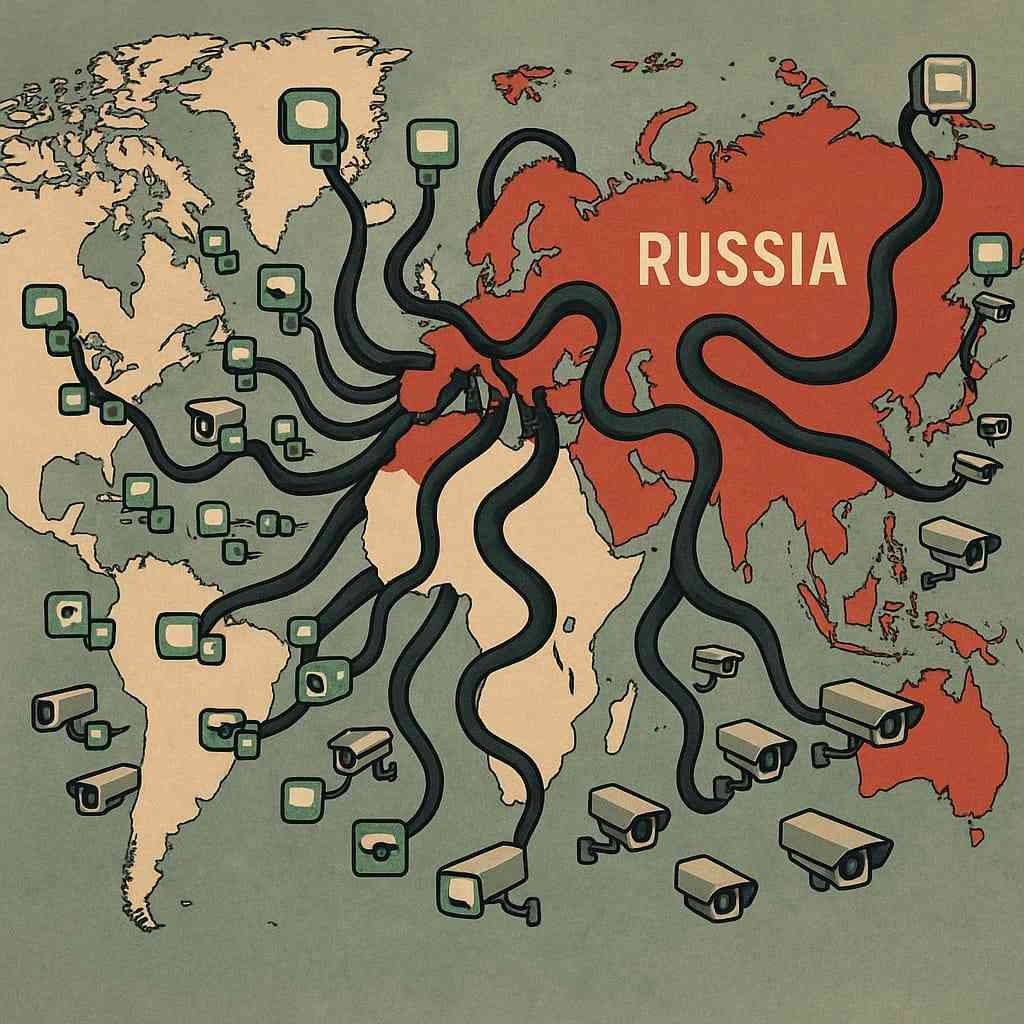
Potential spread of government-controlled apps like that of Russia.
What This Means for You
Even if you're not in Russia, this matters. Every time a government successfully manages digital communication, it sets a precedent. Today it's Russia. Tomorrow it could be anywhere.
The technology exists. The blueprint is there. All it takes is one situation, one emergency, one "for your safety" moment, and suddenly your WhatsApp could be replaced by something similar.
Key Takeaway
Russia's push to replace foreign tech platforms became more urgent as Western companies pulled out following the February 2022 invasion of Ukraine. But this isn't about sanctions or international politics anymore.
This is about control. Pure, simple, terrifying control.
They're not just creating an app. They're creating a digital prison where every message is monitored, every call is recorded, and every document is tracked. And the worst part? They're making it so convenient, so integrated, so mandatory that people won't have a choice.
The death of privacy isn't coming with a bang. It's coming with a notification that says "Download your new government app today!"
And somewhere in Moscow, someone's reading this article on their shiny new government app, wondering if they should have stuck with carrier pigeons.







Be the first to show love! 🚀
Start something amazing - your support inspires creators!