

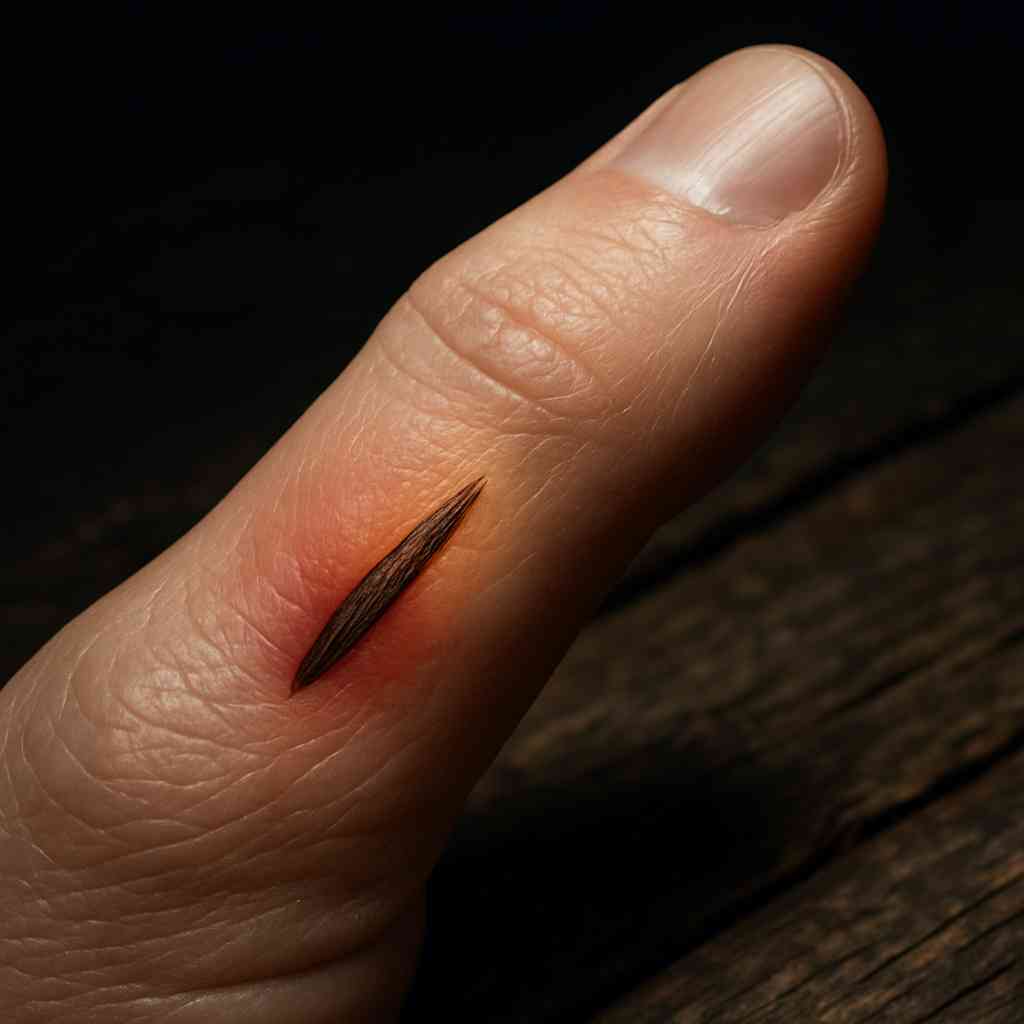
Your skin just swallowed a tiny wooden enemy.
And right now, like, right this very second, something wild is happening under your skin that most people have no clue about.
The Tiny Invader That Makes Your Body Go to War
Picture this: You're sliding your hand across an old wooden table. Maybe you're at a picnic. Maybe you're fixing something in the garage. Then - BAM. That sharp sting hits, and you know. A splinter just made your finger its new home.
Most folks just grab tweezers and yank it out. Done deal, right?
But what if I told you that sometimes, when that splinter burrows too deep for tweezers to reach, your body turns into this incredible removal machine? Yeah, your own flesh becomes the hero of the story.
Here's where things get crazy interesting...
Your Body's Secret Splinter-Fighting Army
When a splinter digs deep into your skin, your body doesn't just sit there and take it. Nope. Within minutes, your immune system spots this wooden invader and basically screams, "INTRUDER ALERT!"
White blood cells (think of them as your body's security guards) rush to the scene faster than people running to a Black Friday sale. According to MedlinePlus Medical Encyclopedia, these cells recognize foreign particles like splinters as antigens and immediately work to destroy or contain them. They surround that splinter like angry bees protecting their hive.
But wait - it gets better.
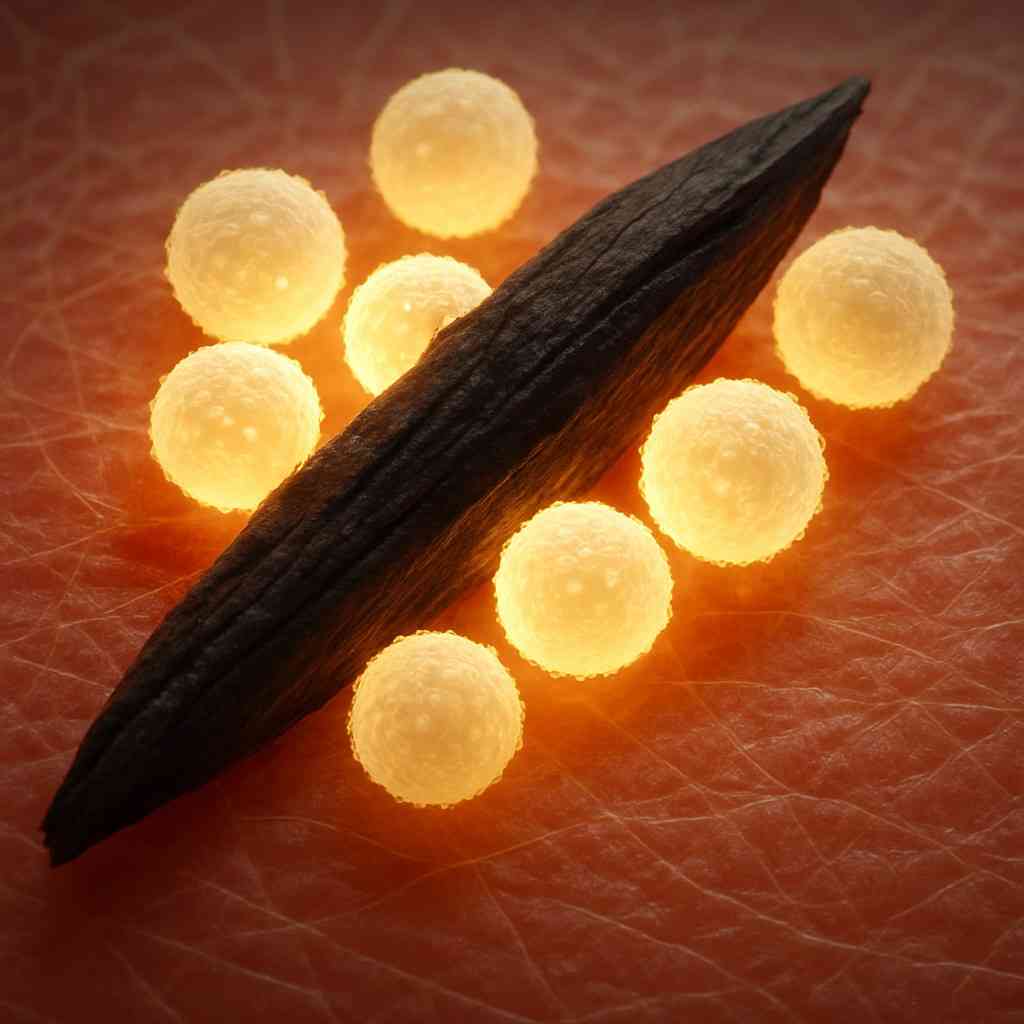 A microscopic view showing white blood cells surrounding a wooden splinter embedded in skin tissue.
The Swelling That's Actually Your Friend
You know that annoying swelling around a deep splinter? The one that makes your finger look like a tiny sausage?
That's not your body messing up. That's your body being absolutely brilliant.
As your immune cells pile up around the splinter, they start releasing chemicals that make the area swell with fluid. This creates pressure - tons of it. And this pressure does something amazing: it starts pushing that splinter upward, toward your skin's surface.
Think of it like this: Your body is creating its own hydraulic lift system. The pus (yeah, the gross yellow stuff) isn't just random gunk. According to research on foreign body reactions, it's actually dead white blood cells mixed with fluid, and it works like a cushion that slowly pushes the splinter up and out. Scientists call this process "foreign body granuloma formation" - basically your body building a wall around the invader while pushing it toward the exit.
The Waiting Game That Drives You Nuts
Here's the part nobody talks about: This process takes time. Like, sometimes weeks.
Every day, that splinter moves just a tiny bit closer to the surface. It's so slow you can't even see it happening. But your body never stops working on it. Never takes a break. It's like having a 24/7 construction crew working under your skin.
Some people can't handle the wait. They dig at it with needles, making things worse. But if you're patient? If you can resist the urge to turn your finger into a DIY surgery project?
Something magical happens.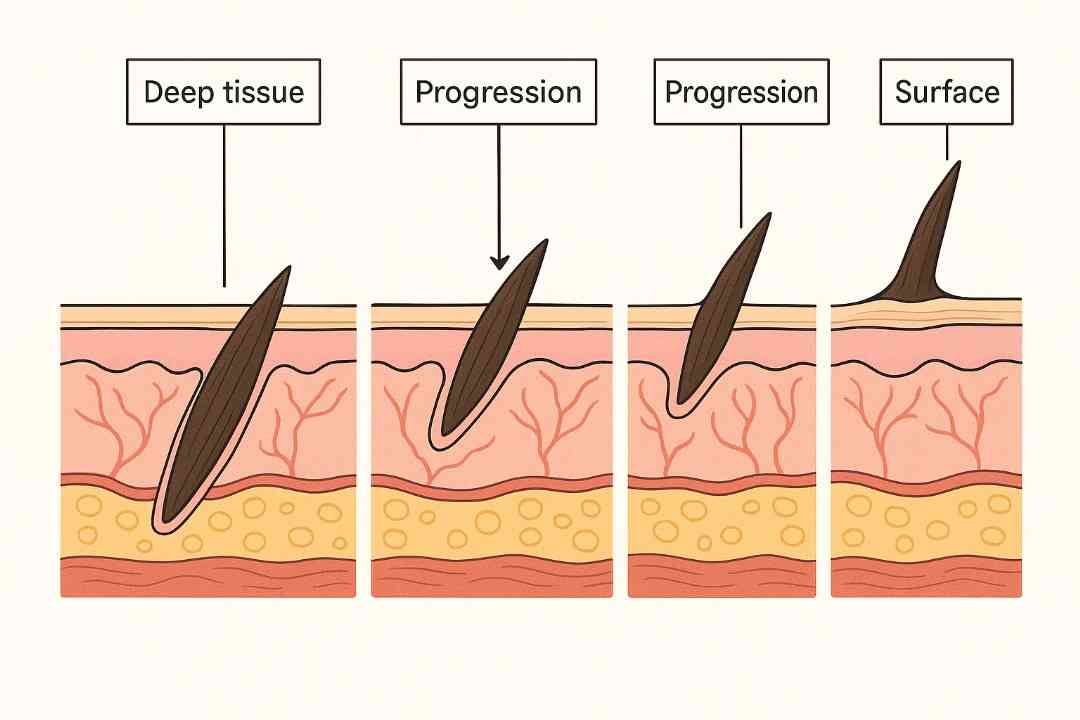
Skin layers showing a splinter's journey from deep tissue toward the surface over time.
When Your Skin Literally Spits It Out
One morning, you wake up and notice something. That deep splinter that's been bugging you for days? You can suddenly see its dark tip peeking through your skin.
Your body has literally pushed it close enough to grab with tweezers. Or sometimes - and this is the really cool part - the splinter just... falls out. Your skin opens up a tiny bit and basically spits it out like, "Here, take your trash back."
I've seen this happen with splinters that were so deep, doctors said they'd need to cut them out. But the body? The body had other plans.
The Science Behind This Body Magic
Let me break down what's really happening here without getting all textbook on you.
Your skin cells multiply (that means they make copies of themselves) super fast around wounds. As new skin forms underneath the splinter, it pushes the old skin - and anything stuck in it - upward. It's like an escalator made of skin cells, slowly carrying that splinter to the exit.
Meanwhile, special enzymes (basically tiny chemical scissors) start breaking down the edges of the splinter, making it smaller and easier to push out. Research from SpringerLink shows that macrophages and foreign body giant cells release these degradative enzymes directly onto the biomaterial surface. Wood splinters especially get attacked by these enzymes because they're organic material that your body can actually digest a little bit.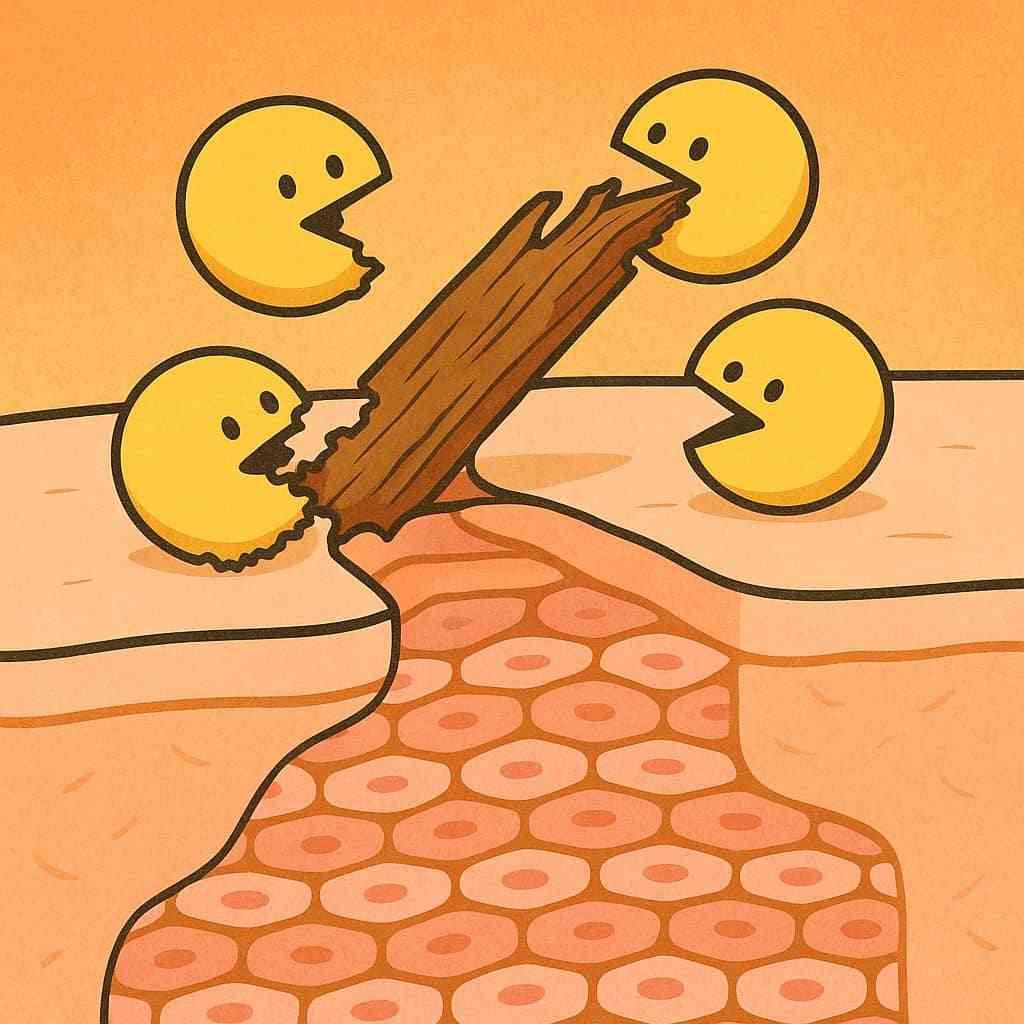
Enzymes shown as tiny pac-man-like creatures nibbling at the edges of a wooden splinter while new skin cells form underneath.
Not All Splinters Get This VIP Treatment
Here's the catch: This amazing splinter-removal system doesn't work for everything.
Glass splinters? Metal shards? Your body can't break those down, so they might stay put forever unless removed. But organic stuff like wood, thorns from plants, even some bug stingers? Your body can handle those like a boss.
The location matters too. Splinters in areas with lots of blood flow (like your fingertips) get removed faster than ones in places with less circulation (like your heel).
Red Flags Your Body Can't Handle It Alone
Sometimes your body waves the white flag and needs backup. If you see:
- Red streaks spreading from the splinter (that's infection traveling)
- Pus that smells bad or looks green
- Fever or feeling sick all over
- The area getting more painful instead of less
That's your body saying, "Hey, I tried, but this is above my pay grade. Get help." According to UF Health, the inflammatory response helps isolate foreign substances, but sometimes professional medical help is needed when the body can't handle it alone.
The Million Dollar Question Everyone Asks
"Should I just leave it alone then?"
Look, if it's shallow enough to grab, grab it. No point making your body do extra work. But if it's deep? If digging for it means turning your finger into hamburger meat?
Sometimes the smartest move is letting your body do what it's designed to do. Give it a week. Keep it clean. Watch what happens.
Your body's been removing splinters since humans first touched wood. It's got this.
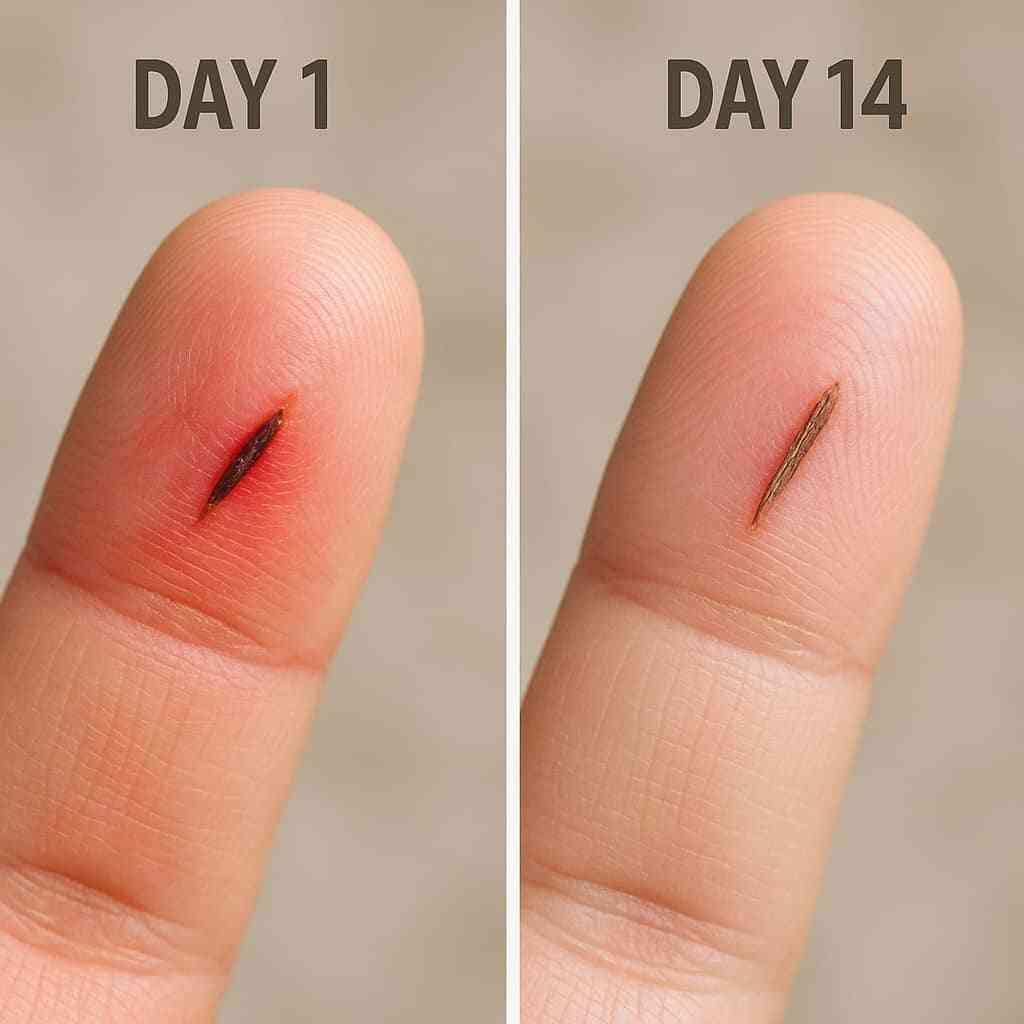 Before and after comparison showing a finger with a deep splinter on day 1 versus day 14, with the splinter visible at the surface ready for removal.
The Plot Twist Nobody Expects
Here's something that'll blow your mind: Some people's bodies are so good at this, they don't even notice when splinters come out. The splinter gets pushed out while they're sleeping, falls off in the shower, or just disappears without them realizing.
Imagine having a splinter for days, worrying about it, and then one day you look and... nothing. Your body handled it while you were busy living your life. Like having a secret maintenance crew that works the night shift.
Your Body Is Smarter Than You Think
Next time you get a splinter buried too deep to reach, remember this: You're walking around with a biological machine that can literally push foreign objects out of itself.
No doctor visit. No expensive tools. Just your body doing what millions of years of evolution taught it to do.
That splinter doesn't stand a chance.
The human body can remove splinters completely on its own - but most people never let it finish the job.




Be the first to show love! 🚀
Start something amazing - your support inspires creators!